The leaky condo crisis is not ancient history. It cost British Columbia an estimated $4 billion across more than 900 buildings and 31,000 units, and a large share of the affected buildings are still standing on the North Shore today. Some have been fully repaired. Some have not. And the difference between those two shows up as a special levy that can run $50,000 or more per unit. This is the due diligence that separates a good older condo from an expensive mistake.
Quick Answer: Which North Shore Buildings Carry the Most Risk
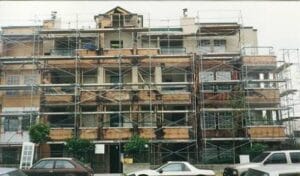
The high risk window is buildings constructed roughly between 1982 and 1999, before rainscreen construction became standard. During those years a change in the building code allowed designs better suited to a dry climate than a coastal rainforest: face sealed stucco walls, minimal roof overhangs, flat parapets and no drainage cavity behind the cladding. Water got in and had nowhere to go.
Rainscreen requirements arrived in Vancouver around 1997 and became mandatory across coastal BC by 2006. So the practical rules of thumb are:
- Built 2006 or later: low envelope risk from this specific issue
- Built 1999 to 2006: moderate, depends on the builder and the municipality
- Built 1982 to 1999 and never remediated: highest risk, treat with real caution
- Built 1982 to 1999 and fully rainscreened: often a good buy, sometimes better than an unremediated newer building
Notice that last one. A properly remediated 1990 building with a healthy reserve fund can be a smarter purchase than a 2004 building that has never been touched. Age alone is not the signal. Documented repair history is.
Cities where you can work directly with us to receive trusted real estate buying and selling services
- top realtor north vancouver
- top realtor in west vancouver
- top burnaby realtor
- top realtor in coquitlam
- top port moody realtor
The High Risk Build Years, Materials and Design Features
You can spot a lot of this from the sidewalk once you know what you are looking at. The classic failure profile combines several of these:
| Feature | Why it caused problems |
| Face sealed stucco cladding | No drainage cavity, so any water that gets past the surface is trapped |
| Minimal or no roof overhang | Nothing sheds water away from the walls |
| Flat roofs and parapets | Standing water and complicated flashing details |
| Large decks cut into the building | Deck to wall junctions are a classic entry point |
| Poor window flashing | The single most common leak source |
| Wood frame, three or four storeys | Rot has structural consequences |
Concrete high rises from the same era are generally lower risk than wood frame low rises, though they are not immune, especially around windows and decks.
Five Documents That Reveal a Building’s Envelope History
Before you remove subjects, you should be reading the strata documents specifically for this, ideally with the full North Vancouver condo buyer checklist beside you. Here is what each one tells you.
- Depreciation report. A long range plan, usually 30 years, estimating when major systems need replacing and whether the contingency reserve can cover it. Look at what it says about the envelope, windows and roof, and at the funding model. Most BC stratas with five or more lots must have one.
- Form B Information Certificate. States current strata fees, amounts owing, known litigation, and critically, whether a special levy has already been approved. If a levy is approved and unpaid, you need to know who is responsible for it at closing.
- Strata minutes, two full years minimum. This is where the real story lives. Search for words like leak, ingress, moisture, envelope, engineer, remediation, restoration and levy. Recurring discussion of “investigating a leak in the northwest corner” over multiple meetings tells you more than any brochure.
- Engineering reports. If the strata has commissioned a building envelope condition assessment, read it. This is the closest thing to a diagnosis you will get.
- Financial statements and the contingency reserve fund balance. A large repair bill against a thin reserve equals a levy. A healthy reserve means the strata has been planning.
Red Flags You Can Spot on a Ten Minute Walk Around
Documents matter most, but your eyes are useful too. Walk the perimeter of the building before the showing ends, and keep the wider red flags in Vancouver home listings in mind while you do.
- Staining, streaking or dark patches on the stucco, especially below windows and deck edges
- Cracked or bulging cladding, or areas of visibly newer patchwork on old walls
- Rusted or bubbling paint on balcony railings and structural connections
- Efflorescence, the white chalky residue on concrete, which means water is moving through
- Moss or persistent damp on north facing walls
- Interior signs inside the unit: fresh paint in only one corner, a musty smell in a closet, warped baseboards, condensation between window panes
None of these is proof on its own. Several together, in a building from the risk years, is a reason to slow down.
“Fully Rainscreened” and What It Actually Guarantees
You will see this phrase in listings constantly, and it is doing a lot of work. Ask three follow up questions.
What was actually done? A full rainscreen means the old cladding came off, a drainage cavity and new membrane went on, flashings were redone and the cladding was replaced. Some “remediation” was much narrower, such as replacing only the worst wall or resealing windows. Those are very different projects.
When was it done, and by whom? Ask for the engineer’s report and the warranty documentation. A remediation completed 20 years ago is itself approaching the end of its expected life for some components.
Was it paid for? A completed remediation with the levy already collected is a genuinely positive feature. A completed remediation with an outstanding balance is a liability you may be inheriting.
Also worth knowing: full rainscreening does not cover roofs, plumbing, elevators or parkade membranes. A building can be rainscreened and still be facing a large levy for something else entirely.
How Remediation Gets Paid For: Special Levies vs the Reserve Fund
There are only two sources of money for a major repair, and both come from owners.
| Funding method | What it means for you |
| Contingency reserve fund | The strata’s savings. Healthy reserves mean the work is already partly paid for |
| Special levy | A one time charge approved by owners, often due within 60 to 120 days |
| Strata loan | Some buildings borrow, spreading the cost into monthly fees instead |
The numbers to have in your head: full envelope rainscreen remediation typically runs $30,000 to $80,000 per unit, and on larger or more damaged buildings it is not unusual to see $50,000 to $100,000. Across BC, the average special levy has been running in the range of $7,500 per unit, but envelope work sits far above that average.
If a levy has been approved before your completion date, the standard contract language matters enormously. Sort out in writing who pays. A levy is one of the largest hidden costs of buying a home in North Vancouver.
The primary services our team offers to support your real estate goals
- luxury mansions for sale
- commercial real estate agent in North Vancouver
- presale condos in North Vancouver
- First Time Home Buyer In North Vancouver
Should You Avoid Older North Shore Condos Altogether?
No, and doing so would cut you out of some of the best value on the North Shore.
Older buildings often have larger floor plans, lower strata fees per square foot, better locations and land value that newer suburban towers do not have. A remediated 1988 building in Central Lonsdale with a strong reserve fund and a competent council can be a better long term hold than a glossy new building with an unproven envelope and rising fees.
The right frame is not old versus new. It is documented versus undocumented. Buy the building with a paper trail. Our comparison of new vs old condos in North Vancouver works through the rest of the trade offs.
Subject Clauses That Protect a Strata Buyer
Your protection is in the contract, and our guide to contract conditions in home buying in BC covers how they are written. Make sure your offer includes, at minimum:
- Subject to review and approval of all strata documents, including at least two years of minutes, the depreciation report, financial statements, Form B and any engineering reports
- Subject to a satisfactory independent inspection, ideally by an inspector who knows building envelopes on the coast
- Subject to satisfactory review of the contingency reserve fund balance and any proposed or approved special levies
- Enough days to actually do all of the above. Five business days is often not enough for a full document review
And then actually use the time. The most common failure in this market is not writing bad subjects, it is writing good subjects and removing them without reading anything.
Frequently Asked Questions
What years should I avoid when buying a BC condo?
Roughly 1982 to 1999 is the highest risk window, unless the building has documented envelope remediation. After 2006, rainscreen construction was mandatory in coastal BC.
How do I find out if a building has been rainscreened?
Ask for the engineering reports and check the strata minutes and depreciation report. Do not rely on the listing description.
What does a building envelope repair cost per unit?
Typically $30,000 to $80,000 for a full rainscreen, and higher on badly damaged or larger buildings.
Who pays a special levy, the buyer or the seller?
It depends on the contract and when the levy was approved. Address it explicitly in your offer rather than assuming.
Are concrete buildings safe from this problem?
Lower risk than wood frame, but not immune. Windows, decks and parkade membranes still fail on concrete buildings.
Can I get a mortgage on a building with a pending levy?
Usually yes, but lenders may factor the levy into your qualification, and some are cautious about buildings in active litigation. Tell your broker early, and know your mortgage pre-approval amount before you shop.
Is a depreciation report enough on its own?
No. Read it alongside the minutes and financials. A depreciation report describes what should happen. The minutes tell you what the strata is actually doing.
What if the building is in litigation?
Litigation against a builder or contractor is not automatically bad, and can mean a recovery is coming. Litigation among owners is a different signal. Find out which it is.
Does a home inspection cover the building envelope?
A standard inspection covers your unit and visible common areas, and our guide to what a home inspection includes sets out the full scope. For a serious envelope concern you want a specialist, and even then a full assessment is usually the strata’s job, not yours.
Should I just buy new instead?
New removes this specific risk but adds others: GST, higher fees per square foot, smaller floor plans and an untested strata. Compare on total cost, not on peace of mind alone, and if the new option is still under construction weigh presale vs resale in North Vancouver.
North Vancouver Neighbourhoods We Serve
Browse the North Vancouver neighbourhoods where we help buyers and sellers, with current market insight for each area.
- Homes for Sale in Edgemont Village
- Canyon Heights Real Estate Agent
- Forest Hills Realtor
- Realtor in Central Lonsdale
- Real Estate Agent in Pemberton Heights, North Vancouver
- Real Estate Agent in Upper Lonsdale, North Vancouver
- Realtor in Braemar
- Homes for Sale in Tempe
- Queensbury Real Estate Agent
Looking for a Real Estate Agent in West Vancouver? Explore by Neighbourhood
Every neighbourhood in West Vancouver has its own pricing, inventory, and buyer competition. Choose your area below for local guidance from Navid Hakimi.
- Homes for Sale in Ambleside
- Real Estate Agent in Dundarave, West Vancouver
- Caulfeild Realtor
- Whitby Estates Homes for Sale
- Gleneagles Real Estate Agent
- Realtor in West Bay
- Homes for Sale in Altamont
- Real Estate Agent in Eagle Harbour, West Vancouver
- Chartwell Realtor
- Cypress Park Estates Homes for Sale
- Horseshoe Bay Real Estate Agent
- British Properties Real Estate Agent
Get a Building History Check Before You Write an Offer
Two condos on the same block, built two years apart, can differ by $60,000 in the levy each is heading toward. Nothing in the listing photos will tell you which is which. It is in the minutes, the depreciation report and the engineering file, and it takes someone who knows what to look for and has read hundreds of them.
Navid Hakimi reviews North Shore strata documents as a standard part of every condo purchase: reading the minutes for envelope history rather than skimming them, checking reserve fund health against upcoming work in the depreciation report, flagging approved and pending levies before you remove subjects, and knowing which North Shore buildings have already been remediated and which have not.
Send Navid Hakimi the building you are considering and get a straight read on its envelope history and levy risk before you write.