Do You Owe It?
Probably not but you absolutely still have to declare.
If you own residential property in North Vancouver, West Vancouver or anywhere else on the North Shore, and you live in it as your principal residence or rent it out long term, you’re exempt. But the exemption is not automatic. You claim it by filing a declaration every single year, by March 31.
Skip the declaration and the Province defaults you to the maximum rate. On a $2 million North Vancouver home that’s a bill you do not want to open.
The three things to remember:
- Every owner on title files separately. You and your spouse each file your own declaration, even for the same property.
- The deadline is March 31 every year, covering how you used the property the previous calendar year.
- The rates went up in 2026 and they go up again in 2027 for foreign owners.
Which North Shore Municipalities Are Covered
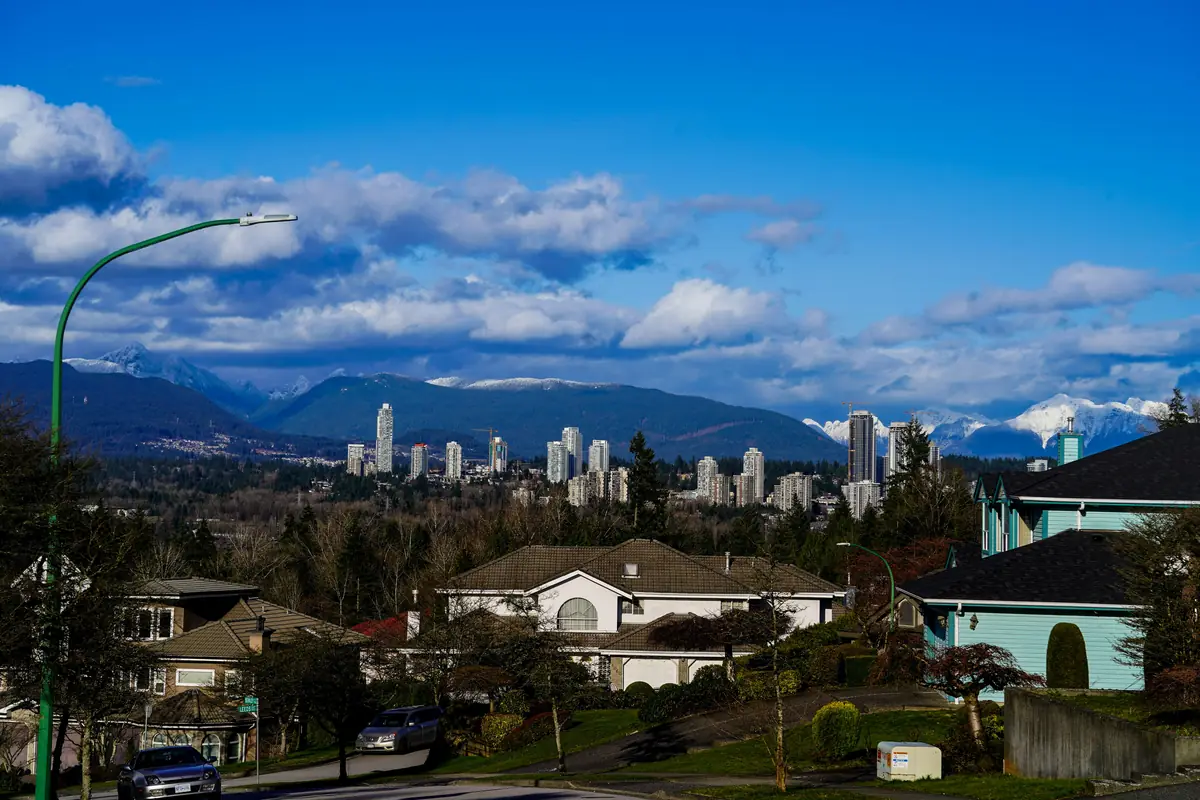
All of them. The speculation and vacancy tax applies across the Metro Vancouver Regional District, which includes:
- City of North Vancouver
- District of North Vancouver
- District of West Vancouver
- Plus Vancouver, Burnaby, Richmond, Surrey, Coquitlam, Port Moody, the Tri-Cities and most of the rest of the region
The one Metro Vancouver exclusion is Bowen Island. Lions Bay is generally outside the designated area as well, but don’t assume the Province publishes an interactive map, and if there’s any doubt about your specific parcel, check it there rather than relying on your municipality’s name.
Across BC the tax now covers 59 communities, so if you own a second property in Kelowna, Nanaimo, Squamish or the Capital Regional District, you’re declaring on that one too.
Current Rates: Residents, Other Canadians, Foreign Owners and Satellite Families
The rates changed for 2026 and change again for 2027. This is the table that matters:
| Tax year | Canadian citizens / PRs (not untaxed worldwide earners) | Foreign owners & untaxed worldwide earners |
| 2019–2025 | 0.5% of assessed value | 2% of assessed value |
| 2026 | 1% | 3% |
| 2027 onward | 1% | 4% |
A few things buried in that table that catch people out:
- The 2026 rates apply to how you used the property during 2026, and are declared in early 2027. Your declaration filed in spring 2026 covers 2025 usage and uses the old rates.
- “Untaxed worldwide earner” includes members of a satellite family a household where the majority of combined income is earned outside Canada and not reported on a Canadian tax return. This catches Canadian citizens and permanent residents too. Citizenship alone does not protect you from the higher rate.
- If you don’t declare at all, the Province applies the maximum rate. Historically that default has been 2 percent of assessed value.
- Shared ownership splits the tax by ownership share. If you and your spouse own 50/50 and neither of you is exempt, you each owe on half the assessed value and if one of you is a satellite family member, the rate can differ between you.
- Corporations, trusts and partnerships get the highest rate applicable to any interest holder. One foreign shareholder can push the whole property to the top rate.
What it costs in practice on a North Shore property:
| Assessed value | 1% (resident, no exemption) | 3% (foreign / untaxed worldwide earner) |
| $900,000 condo | $9,000 | $27,000 |
| $1,500,000 townhome | $15,000 | $45,000 |
| $2,200,000 house | $22,000 | $66,000 |
| $3,500,000 West Van home | $35,000 | $105,000 |
The Declaration: Deadline, Who Files, and What Happens If You Miss It
The timeline runs like this each year:
| When | What happens |
| Mid-January to mid-February | Your declaration letter arrives by mail with a Letter ID and Declaration Code |
| By March 31 | You must complete your declaration online takes a few minutes |
| First business day in July | Payment due if you owe. A 10% penalty plus interest applies after this date |
Who has to file: every individual listed on title. Co-owners cannot file jointly. If three people are on title, three declarations get filed. Since 2024, if you hold a lease registered on title at the Land Title Office, you’re treated as the owner for this tax and you declare too.
You cannot declare until your letter arrives, because you need the Letter ID and Declaration Code. If you’ve moved, changed your name, or recently bought, make sure your address is correct with the Land Title and Survey Authority that’s where BC Assessment and the Province get their mailing data.
If you miss March 31: file late anyway. A late declaration submitted before the July payment deadline is dramatically better than none. If you’ve already been assessed at the maximum rate, you can still correct it, but you’re now dealing with a Notice of Assessment, penalties and interest instead of a five-minute online form.
Be prepared to give your SIN and date of birth. It’s required, and the Office of the Information and Privacy Commissioner has confirmed the Province needs it to administer the tax. Your home owner grant application does not count as a declaration different program, different data.
Cities where we actively help buyers and sellers
- realtor north vancouver
- realtor west vancouver
- real estate agent burnaby
- realtor in coquitlam
- realtor in port moody
The Exemptions Most North Shore Owners Rely On
The vast majority of North Vancouver and West Vancouver owners fall into one of the first two.
| Exemption | What it requires |
| Principal residence | The property is where you make your home. Available to BC residents; more restricted for owners who are not BC residents |
| Long-term rental | Occupied by a qualifying tenant for at least 6 months of the calendar year, in periods of one month or longer. Short-term rentals do not count |
| Recent purchase | You bought the property during the year. Generally exempt for that year |
| Under construction or renovation | Substantial construction or renovation preventing occupancy, done without unreasonable delay |
| Death of an owner | An exemption applies where an owner died during the year or the prior year |
| Separation, illness or absence for medical care | Available where the owner is absent for qualifying reasons |
| Property with rental restrictions | Limited relief in some strata cases where bylaws prohibited rentals |
Two traps worth naming:
The six-month rental rule is strict about duration, not just total nights. Renting a Lower Lonsdale condo to a series of one-week Airbnb guests for eight months gives you nothing. Tenancies must be one month or longer to count toward the six months.
“I use it on weekends” is not an exemption. A West Vancouver property used as a family vacation home, with nobody living there and nobody renting it, is exactly what this tax was built to capture.
There’s also a tax credit available if you don’t qualify for an exemption. BC residents get a credit that offsets tax on a substantial portion of assessed value on one property, and other owners get a smaller credit against BC income. It reduces the bill; it doesn’t remove the filing obligation.
Speculation Tax vs Vancouver’s Empty Homes Tax vs the Federal Underused Housing Tax
Three different taxes, three different governments, three different sets of rules. People conflate them constantly.
| Speculation & Vacancy Tax | Vancouver Empty Homes Tax | Underused Housing Tax | |
| Who runs it | Province of BC | City of Vancouver only | Government of Canada |
| Where it applies | 59 BC communities including all of the North Shore | City of Vancouver only | Nationwide |
| Who declares | Every owner, every year | Vancouver property owners | Primarily non-Canadian owners and certain entities |
| Deadline | March 31 | Early February | April 30 |
| Applies on the North Shore? | Yes | No | Possibly, depending on ownership |
The practical takeaway for North Shore owners: you are not subject to Vancouver’s Empty Homes Tax. You are subject to the provincial speculation and vacancy tax. If you own property in both the City of Vancouver and North Vancouver, you file separately for each tax, and being exempt from one tells you nothing about the other.
If you’re a non-resident owner or you hold property through a corporation or trust, the federal Underused Housing Tax may also apply. That one is worth a conversation with an accountant rather than a blog post.
What Buyers Should Check Before Closing
If you’re purchasing on the North Shore, run these four checks. They cost nothing and they prevent a nasty surprise.
- Confirm the seller’s declaration status. An unpaid speculation tax can become a lien issue. Your lawyer or notary should confirm the position on closing, the same way they handle property tax adjustments and the rest of the costs of buying a home in BC.
- Know that you’ll get a letter next January. Buying in the current year generally means an exemption for that year, but you still declare. Watch your mail.
- Update your address with LTSA at closing. This is the single most common reason people never receive a declaration letter and get assessed at the maximum rate.
- If you’re buying an investment property, plan the tenancy. You need a qualifying tenant for at least six months in periods of one month or more. Buying in October and leaving it empty until spring can create a liability for that calendar year.
Non-resident and satellite-family buyers should get accounting advice before writing, not after. At 3 percent of assessed value on a $2.5 million property, this tax can exceed $75,000 a year, which materially changes the investment case.
What Sellers, Executors and Estates Need to Know
Sellers: you’re still on the hook for the declaration covering the period you owned the property. Selling in June does not erase your obligation to declare the following March for that year’s usage. Keep your mailing address current after closing so the letter finds you.
Executors and estates: there is an exemption where an owner has died, and it generally extends into the following year, which gives an estate time to settle without a tax bill landing mid-probate. But the declaration still has to be filed on the deceased owner’s behalf. This is one of the most commonly missed filings we see the letter arrives at a house nobody is living in and nobody opens it.
Anyone dealing with a property in transition separation, a move to care, an estate, a long renovation should look at the exemption list before assuming they owe. Several of these situations have specific relief, but only if you claim it.
Services our team offers
- luxury homes for sale in North Vancouver
- first-time home buyer services
- presale real estate in North Vancouver
- commercial and industrial real estate
Frequently Asked Questions
Do I have to declare if I live in my North Vancouver home full time?
Yes. The principal residence exemption is claimed through the declaration. If you don’t file, the Province charges you the maximum rate regardless of how you use the home.
What is the deadline?
March 31 each year, covering the previous calendar year’s usage. Payment, if you owe, is due the first business day in July.
My spouse and I own the house together. Can we file one declaration?
No. Every owner listed on title files a separate declaration, including spouses and relatives. The tax is based on each owner’s residency and use.
What happens if I miss the March 31 deadline?
You’ll be assessed at the maximum rate by default. File late anyway doing so before the July payment deadline is far better than not filing. A 10 percent penalty plus interest applies to unpaid balances after the due date.
Does West Vancouver have the speculation tax?
Yes. All of West Vancouver, the City of North Vancouver and the District of North Vancouver fall inside the designated taxable area. Bowen Island is the notable Metro Vancouver exclusion.
Does renting on Airbnb exempt me?
No. The rental exemption requires a tenant for at least six months of the year in periods of one month or longer. Short-term rentals do not count toward it and BC’s principal residence rules make most North Shore Airbnbs non-viable anyway.
What is a satellite family?
A household where the majority of combined income is earned outside Canada and not reported on a Canadian tax return. Members are taxed at the higher rate 3 percent for 2026 even if they’re Canadian citizens or permanent residents.
I just bought my home this year. Do I owe?
Generally an exemption applies for the year you purchase, but you still receive a letter and still declare. Make sure your mailing address is updated with the Land Title and Survey Authority at closing.
Is this the same as Vancouver’s Empty Homes Tax?
No. The Empty Homes Tax applies only within the City of Vancouver and is administered by the City. The speculation and vacancy tax is provincial and applies across the North Shore. If you own in both, you file for both separately.
How much is it on a $2 million North Vancouver home?
At the 2026 resident rate of 1 percent, $20,000 a year. At the foreign owner and untaxed worldwide earner rate of 3 percent, $60,000. Both assume no exemption applies.
Can I appeal the assessed value it’s based on?
Not through this tax. The value comes from BC Assessment, and the deadline to file a notice of complaint with BC Assessment is January 31 each year.
North Vancouver Neighbourhoods We Serve
- Homes for Sale in Edgemont Village
- Canyon Heights Real Estate Agent
- Forest Hills Realtor
- Realtor in Central Lonsdale
- Real Estate Agent in Pemberton Heights
- Real Estate Agent in Upper Lonsdale
- Realtor in Braemar
- Homes for Sale in Tempe
- Queensbury Real Estate Agent
Questions About Taxes on Your North Shore Property?
The speculation and vacancy tax is rarely the deciding factor in a purchase but at 3 percent of assessed value it can quietly turn a good investment into a bad one, and for non-resident and satellite-family buyers it’s a number that has to be in the model from day one.
Navid Hakimi builds this into every North Shore transaction: flagging speculation tax exposure before you write, coordinating with your lawyer or notary on the closing adjustment, and making sure the tenancy plan on an investment property actually qualifies for the exemption rather than just looking like it should.
Tell Navid your situation resident, non-resident, investor, estate and he’ll tell you straight what this tax means for the property you’re looking at.
📞 604-347-6084 or request a consultation.
This article is general information, not tax or legal advice. Confirm your position with the Province, your accountant or your lawyer before you rely on it.