
The Two Numbers Measure Different Things
Your BC Assessment is not what your home is worth today. It’s an estimate of what it was worth on July 1 of the previous year, produced by a mass-appraisal computer model that has never been inside your house.
Market value is what a real buyer will actually pay right now, for your specific home, with your specific view, kitchen and roof.
Those two numbers disagree for three reasons:
- Your 2026 assessment reflects July 1, 2025. That’s six to eighteen months of market movement you can’t see in the number.
- BC Assessment values hundreds of thousands of properties by model, using sales data, lot size, square footage and age. It doesn’t know you renovated the kitchen or that your neighbour’s new build blocked your view.
- The assessment exists to divide up the property tax burden fairly, not to price your home.
The practical rule: never list at your assessed value, never make an offer based on it, and don’t panic when it moves. Get a real market valuation instead.
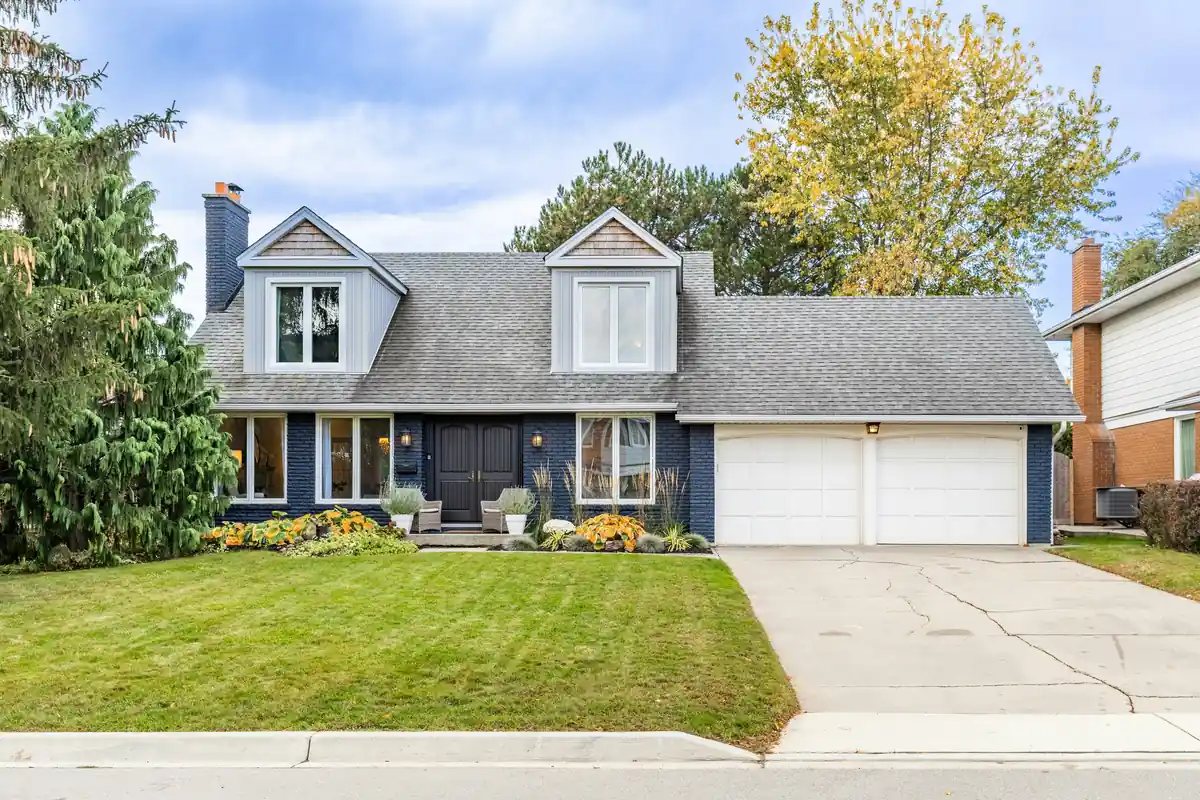
How Far Off Are They in North Vancouver? Typical Gaps by Property Type
There’s no fixed ratio, and anyone who tells you “assessments run 10 percent low” is guessing. But the pattern of where the gaps show up is consistent:
| Property type | Typical accuracy | Why |
| Newer condos in a large building | Closest | Many near-identical units sell often. The model has excellent data |
| Townhomes | Fairly close | Reasonable comparables, some variation in unit position |
| Standard detached on a flat lot | Moderate gap | Model handles the lot well, misses interior condition |
| View properties (Upper Lonsdale, Braemar, Deep Cove) | Largest gap | View premium is extremely hard to model and varies street to street |
| Heavily renovated homes | Large gap, usually assessment too low | The model doesn’t know about interior work |
| Homes needing major work | Large gap, usually assessment too high | The model assumes average condition |
| Redevelopment / large-lot properties | Unpredictable | Land value may exceed the improved value entirely |
On the North Shore specifically, the two categories where assessments go furthest astray are view homes and older houses on valuable lots. A tired 1960s house in Canyon Heights may be worth far more than its assessment because the lot is the asset. A view condo may be worth far more than an identical unit two floors below, and the model may not capture that.
How BC Assessment Calculates Your Value and Why July 1 Matters
BC Assessment values every property in the province using mass appraisal statistical modelling across large groups of similar properties, rather than an individual appraisal of yours.
The inputs are mostly:
- Recent sales of comparable properties in your area
- Lot size, zoning and location
- Home size, age and basic construction type
- Property class (residential, commercial, etc.)
The inputs are mostly not:
- Your renovations, unless a permit was pulled and recorded
- Interior condition, finishes or layout
- Your specific view, unless the model captures it broadly
- Noise, traffic, slope or drainage issues on your particular lot
The July 1 valuation date is the single most important thing to understand. Every assessment on the roll is an estimate of market value as of July 1 of the preceding year, using physical condition as of October 31. Notices go out at the start of January.
So your January 2026 notice tells you what BC Assessment thought your home was worth eighteen months before you’d sell it in mid-2026. In a market that moved 6 percent in a year, that lag alone explains most of the gap.
| Date | What it is |
| July 1 (prior year) | Valuation date the market as of this day |
| October 31 (prior year) | Physical condition date |
| Early January | Assessment notices mailed |
| January 31 | Deadline to file a notice of complaint (appeal) |
Five Reasons Assessments Miss the Market
- The market moved. The most common reason by far. Metro Vancouver’s benchmark is down roughly 6 percent year over year as of mid-2026, so many owners are looking at assessments that feel high compared to what’s selling now.
- Renovations aren’t in the model. If you gutted the kitchen and bathrooms without a permit that flagged it, BC Assessment likely doesn’t know. Good for your tax bill, bad if you assume the assessment reflects what you can sell for.
- Condition isn’t inspected. Nobody walked through your home. A house with a failed roof, aluminum wiring and a 1978 kitchen carries the same “average condition” assumption as a well-maintained neighbour.
- View and micro-location are hard to model. On the North Shore this is a big deal. Two homes on the same block, one with an unobstructed water view and one without, can differ by hundreds of thousands of dollars in the market and much less in the assessment.
- Zoning and development potential. New provincial small-scale multi-unit housing rules have changed what many lots can support. Where redevelopment potential is real, the market may price it well before the assessment roll fully reflects it or the assessment may price it in before buyers are willing to pay for it.
Cities where we actively help buyers and sellers
- realtor north vancouver
- realtor west vancouver
- real estate agent burnaby
- realtor in coquitlam
- realtor in port moody

Does the Assessment Actually Change Your Property Tax Bill?
Not the way most people think. This is the most misunderstood part of the whole system.
Your property tax is not a percentage of your assessment set in stone. Your municipality decides how much revenue it needs, then sets a tax rate that divides that total across all assessed value in the city. What determines your bill is how your assessment moved relative to everyone else’s.
| If your assessment… | Your tax bill… |
| Rose the same as the municipal average | Changes only by the budget increase |
| Rose more than the average | Goes up more than the budget increase |
| Rose less than the average, or fell | Goes up less, or possibly falls |
So a headline like “North Vancouver assessments up 8 percent” tells you almost nothing about your bill on its own. What matters is whether your number moved more or less than the pack.
The practical takeaway: an assessment increase is not automatically a tax increase, and it’s certainly not a windfall. Our North Vancouver property tax breakdown walks through how the City and District rates actually work.
Two other places the assessed value does real work:
- Speculation and vacancy tax is calculated as a percentage of assessed value 1 percent for residents in 2026, 3 percent for foreign owners and untaxed worldwide earners, if no exemption applies.
- Home owner grant eligibility is tied to assessed value thresholds.
Does It Change What Buyers Will Pay?
Mostly, no. Experienced buyers and their agents ignore assessments and look at recent comparable sales, because that’s what an appraiser and a lender will do.
But assessments do influence negotiation psychology, in two directions:
When the assessment is below your asking price, some buyers will use it as an argument. The response is straightforward: the assessment is an eighteen-month-old computer estimate, here are three sales from the last sixty days, and here’s what the property has that the model can’t see.
When the assessment is above market, sellers get anchored to a number that isn’t real and overprice. This is the more damaging version, and it’s common right now because assessments dated July 1, 2025 sit above where the market has since moved. Overpricing burns your best three weeks of buyer attention and usually ends in a lower sale price than pricing correctly would have.
Lenders and appraisers do not use BC Assessment for mortgage purposes. They order an appraisal or use an automated valuation model based on recent sales.
How to Appeal Your Assessment: Deadline, Evidence and Process
The deadline is January 31 each year. If January 31 falls on a weekend, it rolls to the next business day. Miss it and you wait a full year there are no extensions.
Before you appeal, do this first: call BC Assessment. A large share of complaints are resolved informally by an appraiser looking at your file, correcting a factual error, and adjusting the value. It’s free, it takes one phone call, and it doesn’t require a hearing.
When an appeal is genuinely worth filing:
- The recorded facts are wrong square footage, bedroom count, lot size, year built
- Your home has serious condition issues the model assumes away
- Comparable properties on your street are assessed materially lower with no explanation
- The property class is wrong
- You bought recently at a price well below the assessment, in an arm’s-length transaction
When it isn’t worth it:
- “The market has dropped since January.” Irrelevant the valuation date is July 1 of the prior year.
- “My neighbour renovated and I didn’t.” Only helps if you can show your condition is materially worse.
- “It went up a lot.” An increase in line with the area doesn’t change your tax position.
The evidence that actually works:
| Evidence | Why it works |
| Sales of comparable homes around July 1 of the prior year | This is the only date that matters. December sales don’t help |
| Photos and contractor quotes for major deficiencies | Documents the condition the model assumed away |
| Assessment values for genuinely comparable neighbours | Shows inconsistency |
| A recent arm’s-length purchase price | Strong evidence, if the timing is close to the valuation date |
| A professional appraisal at the valuation date | Strongest evidence, but costs money weigh it against the tax savings |
The process: file a notice of complaint by the deadline → the Property Assessment Review Panel hears it, typically February through mid-March → if you’re unhappy with the outcome, you can appeal further to the Property Assessment Appeal Board.
Be honest about the math. Getting a $2 million assessment reduced to $1.9 million might save a few hundred dollars a year. Worth a phone call, rarely worth a paid appraisal.

How to Find Your Home’s Real Market Value Instead
If you’re actually trying to answer “what is my home worth,” here’s the reliability ladder:
| Method | Accuracy | Cost |
| BC Assessment | Low for pricing purposes | Free |
| Online estimate tools (HomeValue, Zillow-style) | Low to moderate model-driven, same blind spots | Free |
| Realtor comparative market analysis (CMA) | High recent local sales, adjusted for your specific home | Free |
| Professional appraisal | Highest, and defensible in court or for a lender | $500–$1,000+ |
For nearly every homeowner question should I sell, what should I list at, how much equity do I have a proper CMA from an agent who works your specific neighbourhood is the right tool. It uses sales from the last 30 to 90 days, adjusts for view, condition, lot and layout, and reflects what buyers are doing right now rather than what a model thought last July.
Get a formal appraisal when you need a number that has to stand up: a divorce, an estate, a court matter, a lender requirement, or a tax filing.
Services our team offers
- luxury homes for sale in North Vancouver
- first-time home buyer services
- presale real estate in North Vancouver
- commercial and industrial real estate
Frequently Asked Questions
Why is my BC Assessment different from market value?
Because it estimates value as of July 1 of the previous year, using a mass-appraisal model that hasn’t seen inside your home. Time lag and lack of condition data explain most of the gap.
Should I list my home at the assessed value?
No. The assessed value is an old estimate produced for taxation. Price from recent comparable sales in your neighbourhood, which may be well above or well below your assessment.
How accurate is BC Assessment?
Reasonably accurate in aggregate for standard, frequently traded properties like condos in large buildings. Much less reliable for view homes, heavily renovated homes, homes in poor condition, and redevelopment lots which describes a lot of North Vancouver.
When is the deadline to appeal?
January 31 each year, rolling to the next business day if it falls on a weekend. There are no extensions. Call BC Assessment first many issues are resolved informally without a formal appeal.
Does a higher assessment mean higher property taxes?
Only if your assessment rose more than the municipal average. Taxes are allocated by relative share of total assessed value, not as a fixed percentage of your assessment.
Will buyers negotiate using my assessment?
Some will try. The counter is recent comparable sales plus the specific features the model can’t capture. Buyers who understand the market don’t lean on assessments.
My assessment went down. Is my home worth less?
Not necessarily. It means the model thinks your value on July 1 of the prior year was lower than the year before. Market conditions since then may be better or worse.
Do lenders use BC Assessment?
No. Lenders order an appraisal or use an automated valuation model based on recent sales. Your assessment doesn’t determine what you can borrow.
Does BC Assessment know about my renovation?
Only if a permit was pulled and recorded, or an assessor updated the file. Unpermitted work usually isn’t reflected which lowers your tax bill and also means the assessment understates your market value.
What evidence do I need for a successful appeal?
Comparable sales from around July 1 of the prior year, documented condition problems with photos and quotes, assessments of genuinely comparable neighbours, or a recent arm’s-length purchase price close to the valuation date. Sales from after the valuation date won’t help.
Is it worth hiring an appraiser to appeal?
Usually only for high-value properties or large discrepancies. Compare the appraisal cost against the actual annual tax saving before you spend the money.
North Vancouver Neighbourhoods We Serve
- Homes for Sale in Edgemont Village
- Canyon Heights Real Estate Agent
- Forest Hills Realtor
- Realtor in Central Lonsdale
- Real Estate Agent in Pemberton Heights
- Real Estate Agent in Upper Lonsdale
- Realtor in Braemar
- Homes for Sale in Tempe
- Queensbury Real Estate Agent
Get an Accurate Market Valuation for Your North Vancouver Home
Every January, North Shore homeowners open an envelope and draw the wrong conclusion from it. Some think they’re richer than they are and overprice. Others think they’re poorer and don’t sell when they should.
Navid Hakimi will give you the number that actually matters: a comparative market analysis using sales from the last 30 to 90 days on your street and in your building, adjusted for your view, your condition, your lot and your layout with a clear explanation of why it differs from your assessment and what that means if you’re thinking about selling.
It’s free, there’s no obligation, and it takes one visit.
📞 604-347-6084 or request a valuation.